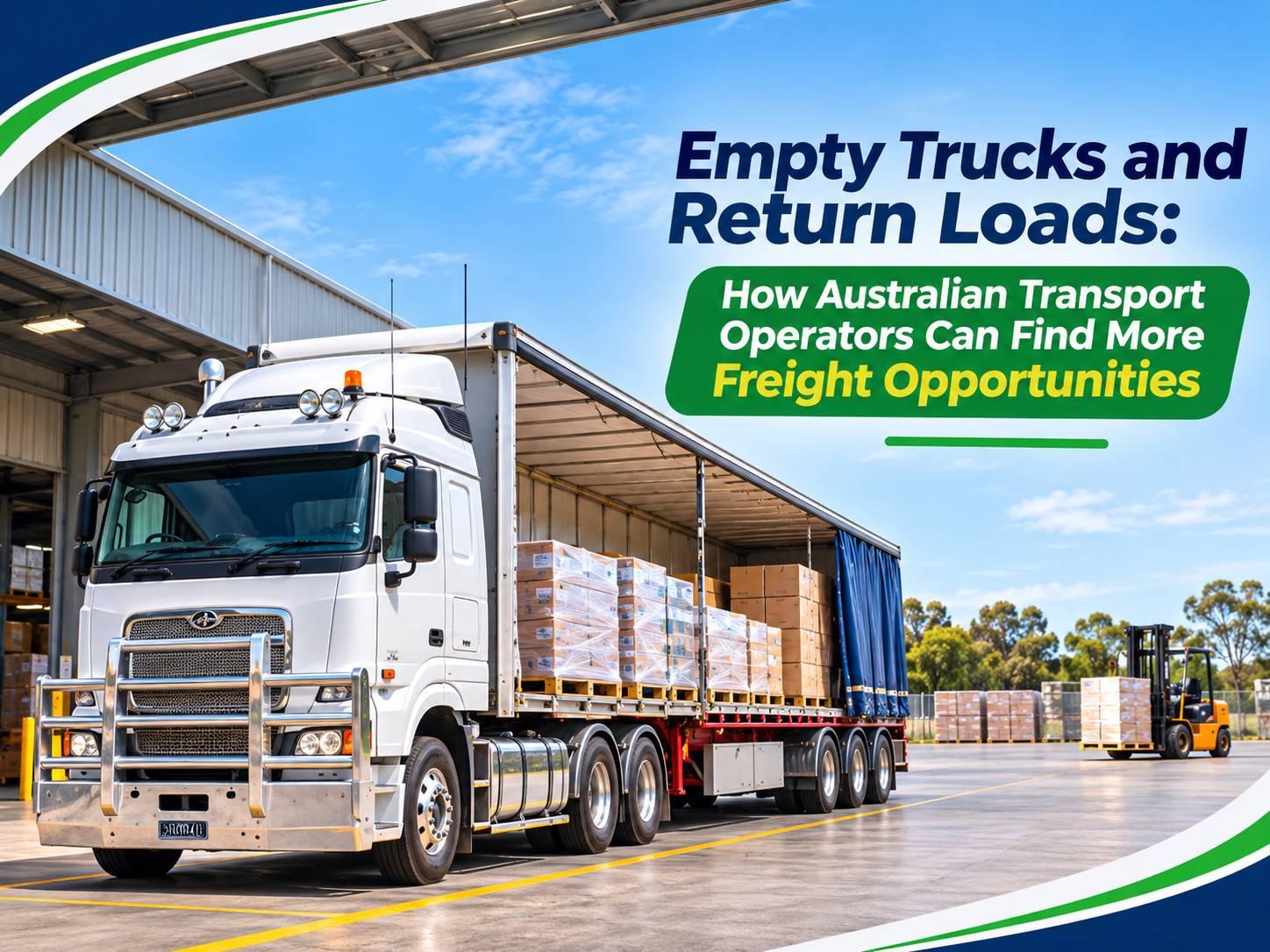
An interstate truck can complete a delivery and still face an expensive journey. The trailer may be empty, but the vehicle continues using diesel, driver time, tyres and maintenance capacity as it travels towards its next job or home base.
For owner-drivers and fleet operators looking for backloads in Australia, return freight can make better use of a planned movement. Yet another load is not always the answer. A sizeable detour, extended loading delays or unsuitable equipment can leave an operator worse off even when the quoted rate looks attractive.
Australia’s 2026 transport coverage has brought the commercial pressures behind these decisions into sharper focus. Rising diesel costs, financial strain on smaller carriers and labour constraints make it especially important to assess a load against the whole trip, not just its loaded kilometres.
Why Empty Running Happens in Australian Road Freight
Freight volumes are rarely balanced in both directions. A vehicle may move manufactured products from Melbourne to Sydney but find limited compatible work on its return. Regional locations, seasonal demand, restricted equipment and fixed customer commitments can further reduce options.
Some empty kilometres are necessary. A carrier might reposition to a depot, travel to an agreed pickup or prepare for an existing booking. The useful distinction is between necessary movements and those that could be reduced through earlier planning or better visibility of suitable freight.
Empty running still incurs fuel, wear, tolls and time costs. That is why the aim should be profitable vehicle utilisation rather than an assumption that every empty trailer must be filled.
What 2026 Fuel-Cost Reporting Means for Truck Operators
On 10 March 2026, ABC News reported that rising oil and fuel prices were placing pressure on road transport businesses already managing difficult operating conditions. The Australian Trucking Association separately warned on 6 March that higher diesel costs would affect freight charges, noting that fuel is a major operating expense and businesses may need to review rates or fuel levies.
These were reported conditions at the time, not a statement of today’s diesel price.
Their relevance to load selection is straightforward: when fuel costs change, the commercial value of extra kilometres changes too. An operator considering a return load needs to allow for the journey to its pickup point, any diversion and the next repositioning leg.
When comparing work, separate the revenue from the costs required to earn it. A load that pays more may still deliver a weaker outcome if it adds significant empty travel, waiting time or a missed commitment.
A Real Melbourne–Sydney Journey: Look at the Whole Movement
An ABC News feature published on 3 May 2026 followed a driver undertaking regular Melbourne–Sydney trips on the Hume Highway. The report illustrated the substantial diesel bill associated with a long-haul movement and the pressure a Victorian transport business faced as fuel expenses rose.
The story is evidence of the costs involved in a real interstate run; it is not evidence that a particular backload was available. For a carrier completing a Sydney delivery, the practical questions are where the truck will finish, whether suitable Melbourne-bound freight exists, how far the collection is from its route, and whether the vehicle can take it without disrupting its next commitment.
For example, a Melbourne-bound pallet load collected close to the truck’s planned departure point may be easier to incorporate than a higher-priced load requiring a long diversion. The better option depends on real freight specifications, site timing, vehicle availability and total costs.
Backloads Australia: Return Loads and How They Differ
A return load is freight picked up after an outbound delivery, often for a movement towards a truck’s depot or next planned destination. A backload commonly means freight using spare capacity on a return or onward movement that is already going ahead. In Australian road freight, the terms are sometimes used interchangeably.
For instance, a tautliner returning towards Melbourne after delivering in Sydney may have capacity for compatible pallets. But available floor space alone is not proof of legal payload or a safe loading arrangement. Axle loading, total mass, dimensions, restraint and compatibility with freight already on board still matter.
A workable backload fits the route, truck, timing and commercial arrangement. A job that adds excessive waiting or leaves the vehicle far from its next booking may simply shift the empty kilometres to a later stage.
For transport operators searching for return loads in Australia, the main consideration is whether the freight suits the return journey.
Why Owner-Drivers Must Evaluate the Entire Rate
On 8 April 2026, ABC News reported industry and union concerns raised during Fair Work Commission proceedings about the financial effects of a fuel-price crisis on truck drivers and transport businesses. A Guardian Australia report published on 31 May 2026 likewise described the pressure volatile diesel costs placed on an owner-driver’s ability to operate economically.
These reports do not establish a universal operating margin. They do underline why small operators need to know their own numbers and avoid treating an extra load as automatically profitable.
Before accepting return freight, check the agreed rate and GST treatment, fuel and toll exposure, loading and unloading time, payment terms, additional handling, cancellation conditions and the cost of reaching the next work location. A load can create revenue without creating a worthwhile return after these factors are considered.
Find Suitable Return Freight Before the Truck Becomes Empty
Early planning gives operators more time to assess opportunities properly. On regular corridors, look at the likely delivery area and next intended movement before the outbound job is complete. Confirm whether a load is actually ready, whether collection can occur within its booked window and whether the driver has sufficient lawful and safe time to complete the task.
Do not search only around the depot. If a vehicle finishes in Western Sydney, the actual unloading location and road access may make some advertised Sydney pickups much more realistic than others. Check the full route to collection, delivery and the subsequent commitment.
Carrier experience with a lane is helpful, but it cannot guarantee suitable freight on any given date. The operator still needs sufficient information to decide whether the job fits.
Owner-drivers looking to find freight loads should start reviewing suitable opportunities before completing their outbound delivery. This gives them more time to assess collection locations, timing and whether the return movement is commercially practical.
Match the Freight to Available Trucks and Equipment
A truck that is travelling in the right direction may still be unsuitable for the load. Conventional palletised goods may suit a curtainsider or pantech, while temperature-controlled freight needs suitable refrigeration. Containers, machinery, long loads and other specialised freight may require entirely different trailer and loading arrangements.
Before responding, establish the commodity, quantity, unit and total mass, length, width and height, packaging, stackability and handling requirements. Verify the legal payload and mass distribution, not just the visible space on the vehicle.
Collection and delivery sites also matter. A warehouse could require a booked dock slot; a regional property may have narrow access or no forklift; a port-related movement could involve terminal appointment conditions. Clarify loading responsibilities and any likely waiting time before committing.
Factor In Driver Availability and Industry Workforce Pressures
In its 23 June 2026 analysis, the International Road Transport Union (IRU) described growing pressures on Australia’s trucking workforce, including an ageing driver population, recruitment difficulties and limited training pathways. This wider context matters to freight planning because usable vehicle capacity also depends on available drivers and workable schedules.
For a particular return movement, drivers’ work and rest obligations, loading and unloading time, fatigue, site windows and existing commitments must all be considered. An attractive rate cannot justify an unsafe or unlawful schedule. Shippers and carriers should communicate realistic collection and delivery expectations.
Driver shortages do not mean that every spare truck can take another load. They reinforce the importance of matching each freight opportunity with actual operating capacity.
A Practical Checklist Before Accepting a Return Load
-
Route: Where is the truck now, how far is the collection, and where does the delivery leave it?
-
Freight: Are the quantity, dimensions, mass, packaging and special handling requirements accurate?
-
Equipment: Does the available truck or trailer have the right configuration, safe capacity and loading arrangements?
-
Timing: Are site opening hours, bookings, work and rest requirements and next jobs compatible?
-
Commercial fit: Will the rate cover the extra kilometres, fuel, tolls, waiting, handling and likely repositioning?
-
Terms: Are GST, detention, payment timing, cancellation and proof-of-delivery expectations understood?
Operators can also monitor empty-kilometre percentage: empty kilometres divided by total vehicle kilometres, multiplied by 100. Track this alongside deadhead-to-pickup distance and waiting time, and compare results across comparable routes rather than applying one target to every type of operation.
How Freightland Carriers Australia Fits Into the Picture
Freightland Carriers Australia (FCA) is an online freight marketplace connecting shippers with registered independent transport operators and owner-drivers. Shippers can post freight requirements, and interested operators can review opportunities and respond or submit bids when the proposed movement suits their routes, equipment, capacity and availability.
For a carrier searching for return work, the marketplace provides another place to consider freight beyond existing customer relationships. Interested operators can review available freight loads and submit bids for opportunities that suit their routes and equipment. Shippers can compare available responses and select a carrier. FCA supports booking, payment, shipment coordination and tracking through its platform. The carrier still needs to assess each opportunity and agree on the applicable transport details and commercial terms with the shipper.
FCA does not operate its own fleet or physically move the freight. It cannot guarantee suitable backloads, additional income, fuel savings or that any particular job will receive a response. The value lies in providing another connection between genuine freight requirements and transport capacity.
Conclusion: Better Return Loads Start With Better Decisions
Empty running is a common challenge for Australian transport operators, but accepting every available return load is not necessarily the best commercial decision. A suitable backload should match the truck's route, equipment, available capacity and schedule while accounting for fuel costs, waiting time, detours and other operating expenses.
For owner-drivers and transport operators looking for Backloads Australia opportunities, Freightland Carriers Australia provides an online marketplace where registered carriers can explore freight requirements posted by shippers and respond to suitable opportunities. Register with Freightland Carriers Australia, explore available freight loads and submit bids on opportunities that match your routes, equipment, capacity and operating requirements.
Frequently Asked Questions
What is a return load in Australian road freight?
It is freight carried after an outbound delivery, commonly towards a depot, home base or another destination. Its suitability depends on the truck, route, timing and terms.
Is a backload always cheaper than a dedicated transport job?
No. Using existing capacity can be commercially useful, but detours, site delays, loading requirements and demand all affect the proposed rate.
How do fuel costs affect whether a return load is worthwhile?
Fuel affects the cost of the additional kilometres required for collection, delivery and any repositioning. Compare the whole movement, not just loaded-distance revenue.
How can an owner-driver find available freight loads through Freightland?
Registered carriers and owner-drivers can explore shipper-posted freight requirements, review suitable opportunities and submit bids or responses. Shippers assess available proposals and select an operator. No particular load, response or income is guaranteed.
What should I confirm before accepting a backload?
Check freight dimensions and mass, vehicle suitability, pickup and delivery access, timing, driver availability, the full route and agreed charges.
Does Freightland support booking, payments and shipment tracking?
FCA is a marketplace, not a fleet operator or the business physically carrying the freight. Its platform supports booking, payment, shipment coordination and tracking, while the selected independent carrier performs the transport. Availability of particular loads or successful delivery is not guaranteed.